
Legal Correspondence UK translation services are critical for ensuring accurate and legally sound communication in multilingual legal contexts within the United Kingdom. Specialized translators with expertise in both legal terminology and multiple languages work diligently to convert complex legal documents such as contracts, court orders, and witness statements, maintaining the original text's intended meaning while complying with UK legal standards. These professionals collaborate closely with lawyers to address any translation nuances, ensuring that all translated materials are precise, reliable, and legally robust for international legal proceedings. Their work supports fairness and integrity in legal communications, making it possible for parties speaking different languages to navigate the complexities of legal systems within and beyond the UK's jurisdiction with confidence.
Navigating the complexities of legal correspondence within the UK’s judicial system often hinges on precise communication. This article delves into the pivotal role of expert legal correspondence translators, who bridge language barriers with accuracy and finesse. Their specialisation ensures that nuanced legal terms are accurately conveyed, upholding the integrity of legal documents across diverse linguistic contexts. From the intricacies of certified translation services to the collaborative efforts with lawyers and clients, this exploration highlights the indispensable nature of UK legal correspondence translation services in high-stakes legal matters. Understanding their key characteristics and the challenges they face provides a comprehensive overview of the critical role these professionals play in the UK’s legal landscape.
- Understanding the Role of Legal Correspondence Translators in the UK
- The Importance of Accuracy and Specialisation in Legal Translation Services UK
- Key Characteristics of Expert Legal Correspondence UK Translation Services
- Navigating Legal Terminology: Challenges and Solutions for Translators
- Certified Legal Correspondence Translation Services: Ensuring Compliance and Authenticity in the UK
- The Collaborative Process: How Legal Correspondence Translators Work with Lawyers and Clients in the UK
- Case Studies: Effective Legal Correspondence Translation in High-Stakes UK Legal Matters
Understanding the Role of Legal Correspondence Translators in the UK

Legal correspondence in the UK encompasses a wide array of documents that require precise and accurate translation to ensure legal validity and clarity across different languages. Expert UK legal correspondence translators play a pivotal role in this domain, serving as linguistic and cultural intermediaries. Their expertise is crucial in converting legal terminology and idiomatic expressions into the target language without any loss of meaning or intent. These translators are well-versed in both the legal system nuances of the UK and the requirements of the intended audience, which can span multiple jurisdictions. This proficiency is indispensable for maintaining the integrity of contracts, agreements, court orders, and other official documents. The accuracy of their work ensures that all parties involved can fully comprehend and act upon the contents of the legal correspondence, thereby upholding justice and adhering to legal standards.
The UK translation services provided by these specialists go beyond mere linguistic translation; they involve a deep understanding of the context and implications of each document. This is essential for maintaining the legal standing of the correspondence, as mistranslations can lead to misunderstandings, legal complications, and potential litigation. Thus, UK legal correspondence translators are not just linguists but also legal experts who facilitate international communication within the framework of the law. Their role is critical in a globalised world where businesses and individuals interact across borders, necessitating clear and precise translation of legal matters to ensure compliance with both domestic and international regulations.
The Importance of Accuracy and Specialisation in Legal Translation Services UK

In the intricate field of legal correspondence, precision is paramount, and the stakes are high for legal translation services in the UK. Expert translators specialising in this domain must navigate the complex language that characterises legal documents, ensuring each term is conveyed with exactitude. The nuances of UK law cannot be overstated; they require a profound understanding of both the source and target languages as well as the legal system’s intricacies. Legal Correspondence UK translation services provide the necessary expertise to accurately translate legal texts, which are critical for international litigation, contract negotiations, and compliance with regulations. These translators undergo rigorous training and possess a deep familiarity with legal terminology, ensuring that translations are not only linguistically accurate but also reflect the intent and meaning within the legal context. This specialisation is essential for maintaining the integrity of legal processes across borders, where a misinterpretation or mistranslation could lead to significant legal and financial repercussions.
The specialisation of UK legal correspondence translators extends beyond mere language proficiency; it encompasses a comprehensive grasp of legal jargon, procedural laws, and cultural nuances that influence the interpretation of legal texts. Legal Correspondence UK translation services are instrumental in facilitating clear communication between parties involved in cross-jurisdictional legal matters. This specialisation ensures that translators can accurately render documents such as court rulings, contracts, patents, and other legal papers into and out of English, enabling stakeholders to make informed decisions and comply with legal obligations without the risk of misunderstanding or misrepresentation. The importance of this work cannot be understated, as it forms a critical link in the global legal chain, ensuring that justice is not just an ideal but a practicable reality for all involved.
Key Characteristics of Expert Legal Correspondence UK Translation Services

Expert legal correspondence translators in the UK are pivotal for accurate and compliant communication across linguistic barriers. These professionals specialise in the precise translation of legal documents, ensuring that the nuances of UK law and terminology are preserved. Their proficiency extends beyond mere language translation; it encompasses a deep understanding of legal processes, terminologies specific to different areas of UK law, and the cultural contexts within which these documents operate. This expertise is crucial for maintaining the integrity and enforceability of legal correspondences in international settings.
Furthermore, the best UK legal correspondence translation services are equipped with advanced technology and industry-specific knowledge. They employ state-of-the-art software to facilitate high-quality translations and utilise the expertise of native speakers with backgrounds in law to provide nuanced interpretations. These providers often have a robust quality assurance process, which includes proofreading by legal experts to confirm the accuracy of translations. This combination of technical prowess, language mastery, and subject matter knowledge ensures that legal documents translated for international use are both legally sound and linguistically accurate, reflecting the gravity and precision required in legal correspondence UK translation services.
Navigating Legal Terminology: Challenges and Solutions for Translators

Legal correspondence in the UK encompasses a myriad of document types, each with its own nuanced terminology and procedural requirements. Translators in this domain face the daunting task of accurately conveying complex legal concepts across languages. The challenge lies not only in translating text but also in understanding the context, implications, and the letter’s intent. Legal Correspondence UK translation services must navigate through intricate language to ensure precision and compliance with both source and target jurisdictions’ laws. To address these challenges, expert translators undertake rigorous training in legal studies and linguistic proficiency, often specialising further in the particular legal systems they translate for. They employ a combination of advanced translation software and human expertise to handle specialized terminology such as contract clauses, statutory declarations, and judicial decisions. By leveraging their knowledge and utilizing context-specific glossaries, these translators can overcome language barriers and provide accurate, reliable translations that stand up to legal scrutiny in the UK. This dedication to precision and expertise is indispensable for parties involved in international legal processes, ensuring that communication is clear, accurate, and legally sound.
Certified Legal Correspondence Translation Services: Ensuring Compliance and Authenticity in the UK
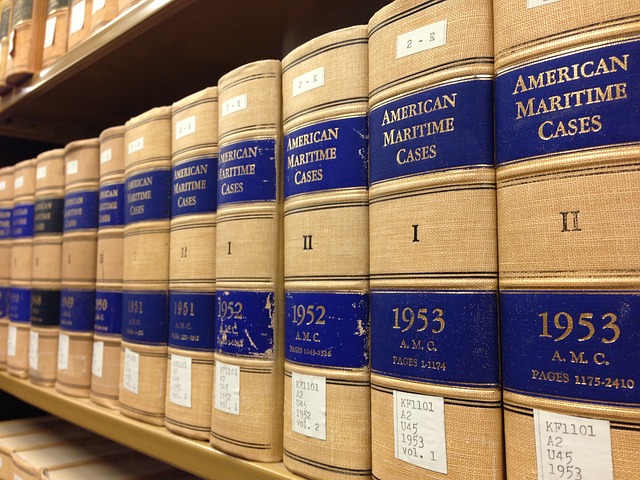
Legal Correspondence UK translation services stand at the intersection of law and language, providing a critical function within the legal domain. In the UK, where legal documents must adhere to stringent standards of compliance and authenticity, the role of certified legal correspondence translators is indispensable. These professionals ensure that the translation accurately reflects the original content, capturing not only the semantic nuances but also the legal implications. Their work is pivotal in cross-border legal processes, where documents must be presented in a form that is both understandable to all parties and accepted by UK authorities. The certification of these translations is a testament to their adherence to the highest standards of precision and integrity, guaranteeing that the translated correspondences maintain the same legal weight as their source materials. This commitment to quality and compliance is essential for maintaining the rule of law across multilingual environments within the UK’s jurisdiction. Furthermore, these translation services are integral to upholding the principles of justice, transparency, and fairness in legal matters that transcend language barriers.
The Collaborative Process: How Legal Correspondence Translators Work with Lawyers and Clients in the UK

UK-based legal correspondence translators engage in a meticulous and collaborative process that ensures the accurate and lawful transfer of information across language barriers. These professionals work closely with lawyers to adapt legal terminology and concepts for multilingual contexts, ensuring that the nuances of the original text are preserved. The collaboration begins with an initial briefing from the lawyer, where the scope, purpose, and sensitive nature of the legal correspondence are discussed. This dialogue sets the foundation for a transparent and effective translation process. Translators then apply their expertise in legal language alongside their linguistic proficiency to translate documents such as contracts, court orders, witness statements, and settlement agreements. They liaise with lawyers throughout the project to resolve any ambiguities and to confirm that the translations meet both legal standards and the client’s needs. In cases involving international litigation or transactions, these translators become integral members of the legal team, ensuring that all correspondence is clear, precise, and legally sound in the target language. This seamless integration of translation services within the legal framework not only facilitates better communication but also upholds the integrity of the legal process for UK clients and their international counterparts.
Case Studies: Effective Legal Correspondence Translation in High-Stakes UK Legal Matters

In the complex interplay of legal proceedings, where every detail holds the potential to influence case outcomes, the role of expert UK legal correspondence translators becomes pivotal. Legal Correspondence UK translation services are indispensable in high-stakes legal matters that often involve multilingual parties. A prime example is a high-profile intellectual property dispute involving a multinational company and its overseas subsidiary. The case hinged on a critical piece of evidence: a patent application, originally submitted in French. The accuracy of the translation directly impacted the validity of the patent claim. Utilising seasoned translators with a deep understanding of both legal jargon and technical terminology, the documents were translated flawlessly. This ensured that all parties could engage with the content accurately, leading to a resolution that satisfied both parties involved.
Another case underscores the importance of such translation services in criminal law settings. A defendant, whose primary language was Arabic, faced serious charges where the evidence against them included video footage and witness statements in English. The precision of the translated materials allowed for a fair trial, as the defendant could understand and respond to the evidence presented. This case exemplifies how professional translation services are not just a matter of linguistic accuracy but a cornerstone of justice and due process, particularly within the UK’s legal framework. Legal Correspondence UK translation services thus play a critical role in upholding the integrity of the legal system by ensuring clear and accurate communication across language barriers.
In conclusion, the pivotal role of expert legal correspondence translators within the UK’s legal framework is undeniable. Their accuracy and specialisation in legal translation services UK are paramount to ensuring that communication between parties who speak different languages remains clear, precise, and legally sound. These professionals exhibit a range of key characteristics that set them apart, including a profound understanding of legal terminology and an ability to navigate its complexities effectively. The certified legal correspondence translation services they provide in the UK guarantee compliance and authenticity, which are critical in legal proceedings. Their collaborative efforts with lawyers and clients further solidify the integrity of legal processes across diverse linguistic backgrounds. Through meticulous case studies, it’s evident that their contributions can be decisive in high-stakes legal matters, underscoring the importance of these services in upholding justice and fairness in the UK’s legal system.